
When
Before Cutting
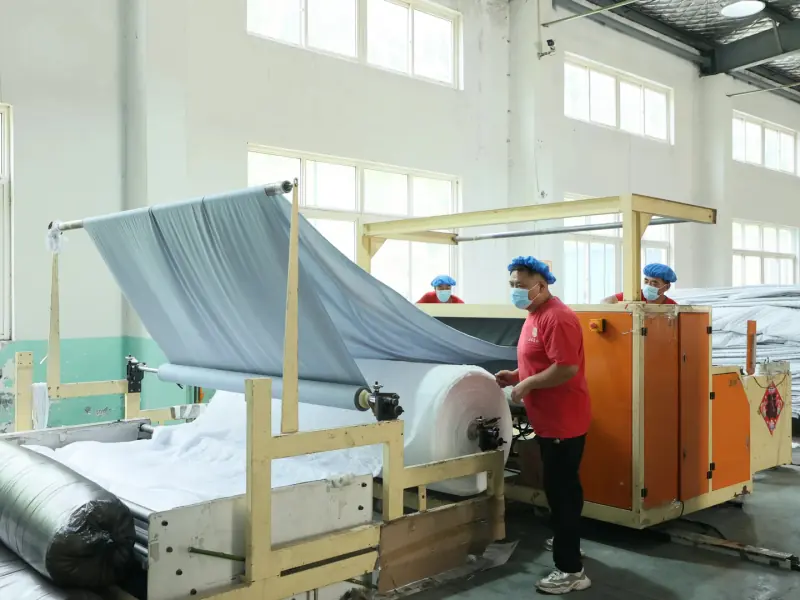
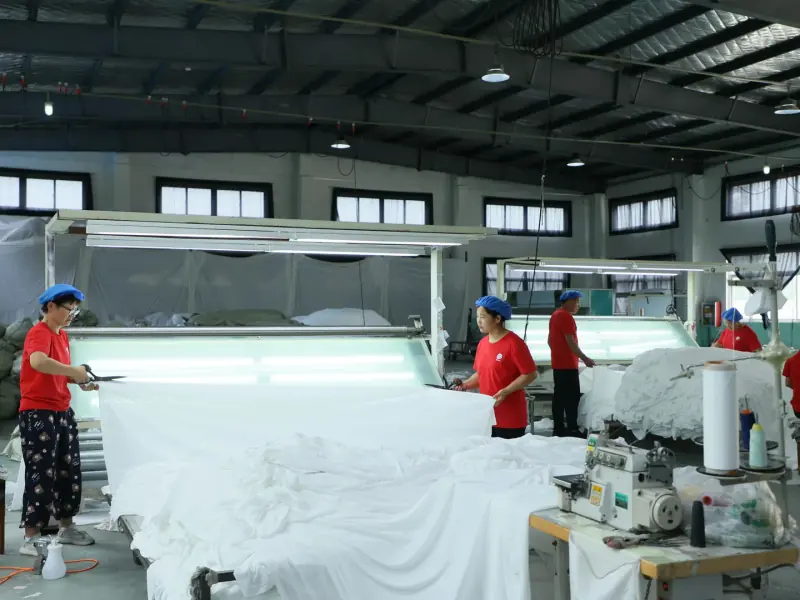
Raw fabric is inspected before it is released to cutting and production.
Quality Control / Real Factory Evidence
Before fabric enters cutting, Dreamelix uses batch-based incoming material inspection to identify visible material issues early—while the material can still be marked and handled before further processing.
The risk-control point
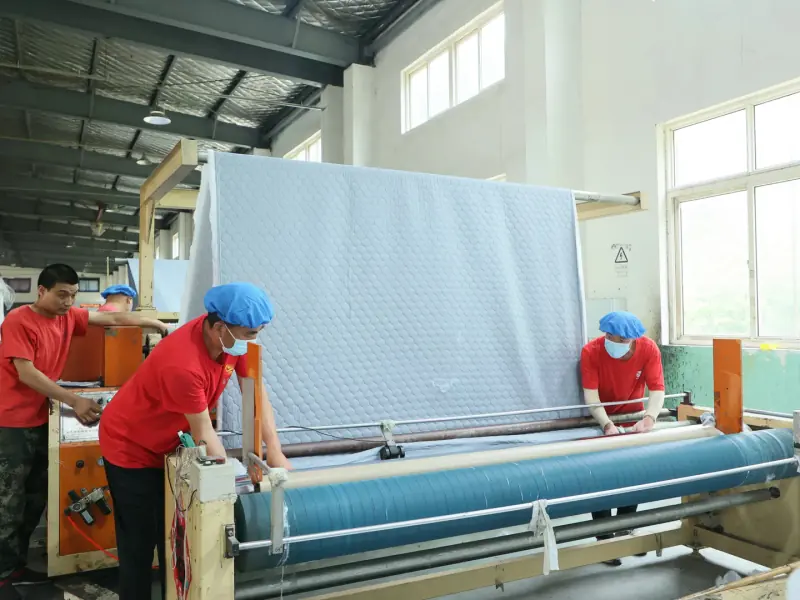
Once material has been cut and moved into sewing, a fabric issue can affect more pieces, create rework, and put delivery timing under pressure. Incoming inspection helps identify visible problems before that risk moves further into production.
Step 01
A practical control point organized around when the check happens, how the material is reviewed, and what happens when an issue is identified.
When
Raw fabric is inspected before it is released to cutting and production.
How
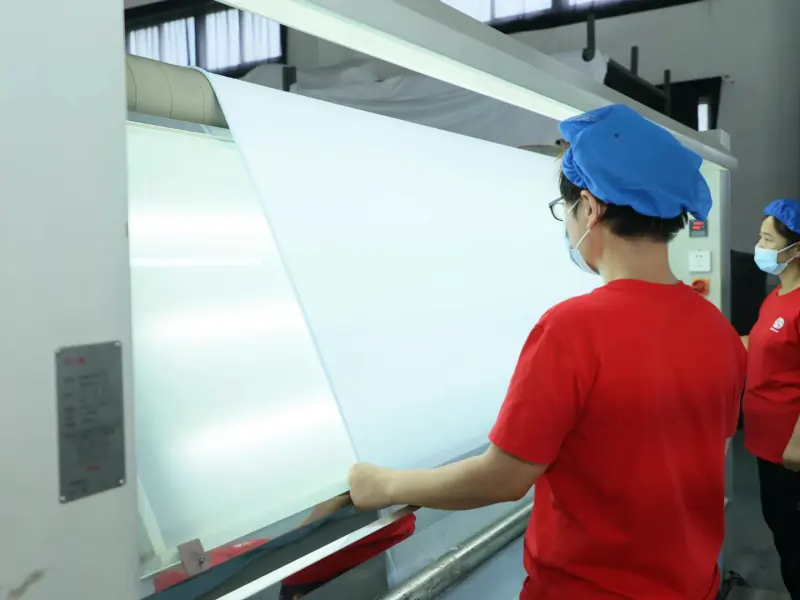
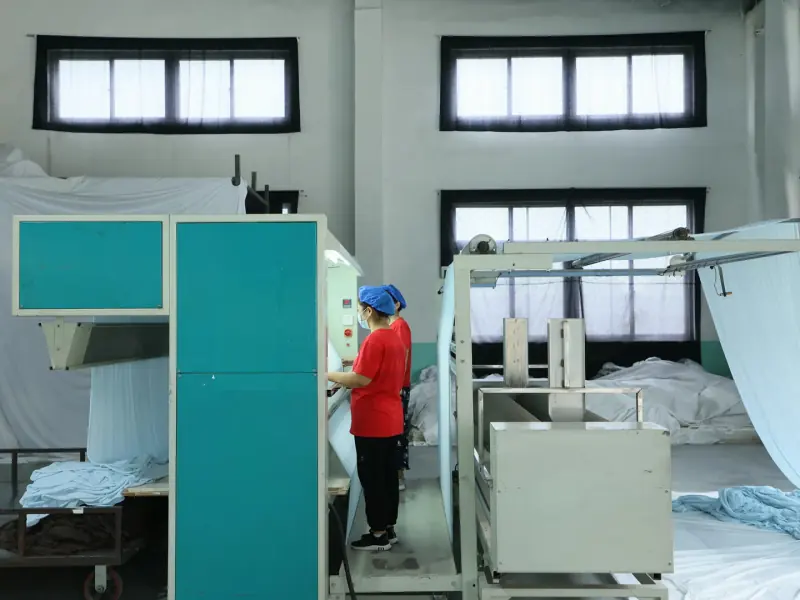
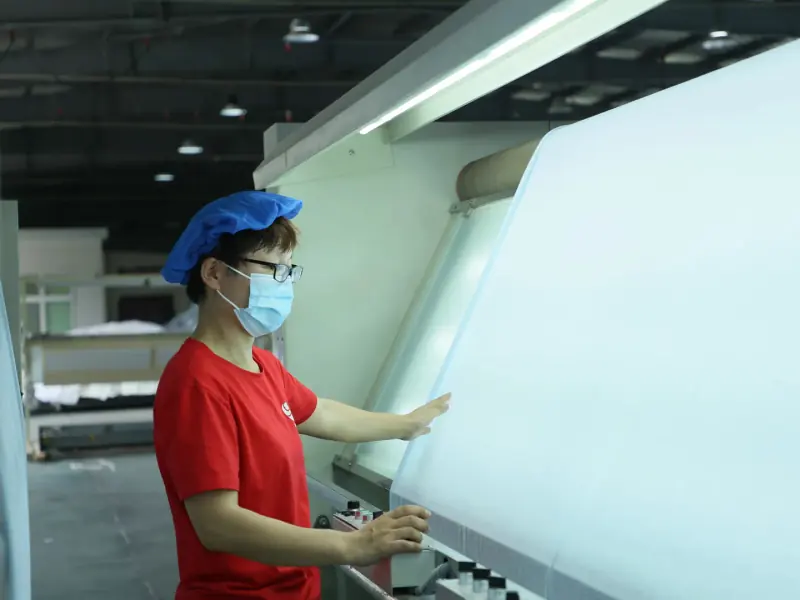
Incoming material QC personnel use fabric inspection equipment and illuminated inspection surfaces to review samples from each incoming batch.
What we check
Each card represents a condition confirmed as part of the incoming material review.
Additional material check
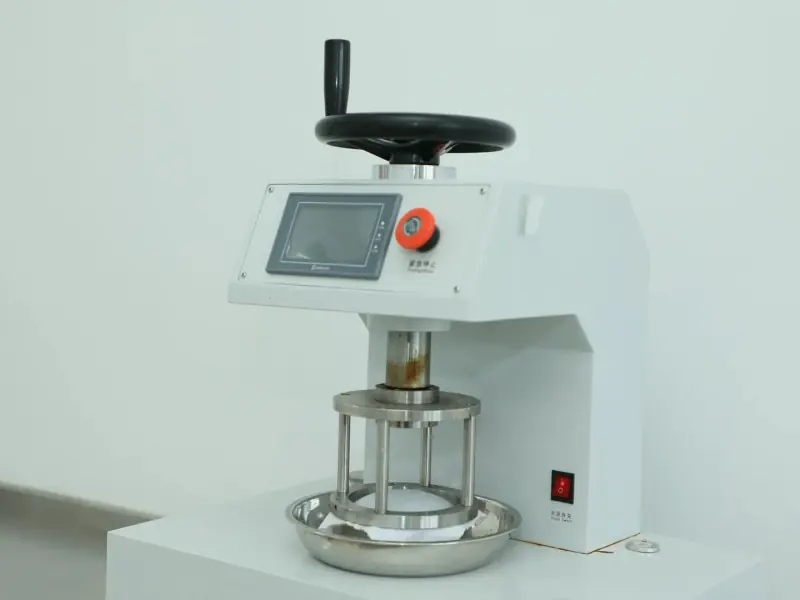
Separate equipment is used to prepare a defined fabric sample for GSM checking. No numerical tolerance is stated here because the applicable requirement depends on the confirmed material specification.
Inspection evidence
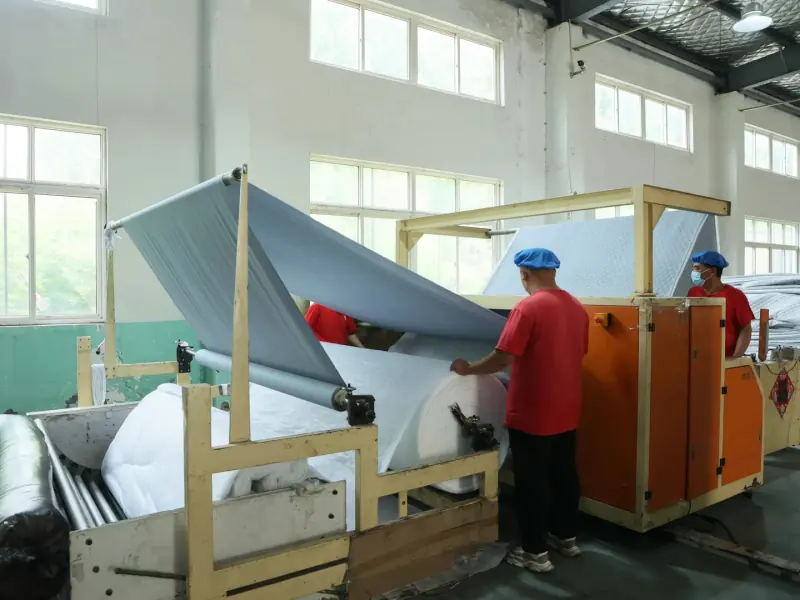
These images show two different parts of the same review: moving fabric through inspection equipment and viewing the material against an illuminated surface.
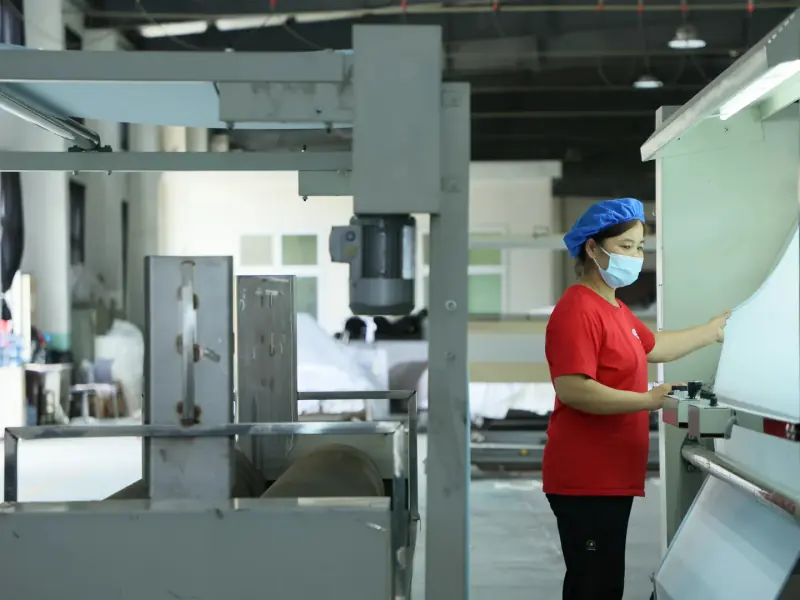
After inspection
Process response
The affected area is marked. Based on the inspection result, problem material is separated from production and returned to the material supplier.
Follow-up context
Inspection records can reference the roll number, batch number, material supplier, and related order, supporting follow-up when a material issue is identified.
Video Evidence
A fabric sample is secured on the test equipment, exposed to water from above, and tested under controlled conditions. This demonstration provides visible evidence of how the waterproof fabric performs during the test process.
Tell Us About Your Waterproof Performance RequirementsFinished-Product Safety Check
After sewing and before packing, products pass through needle-detection equipment to screen for broken needle fragments and other detectable ferromagnetic metal foreign matter. This step helps reduce the risk of foreign matter moving into packing and shipment.
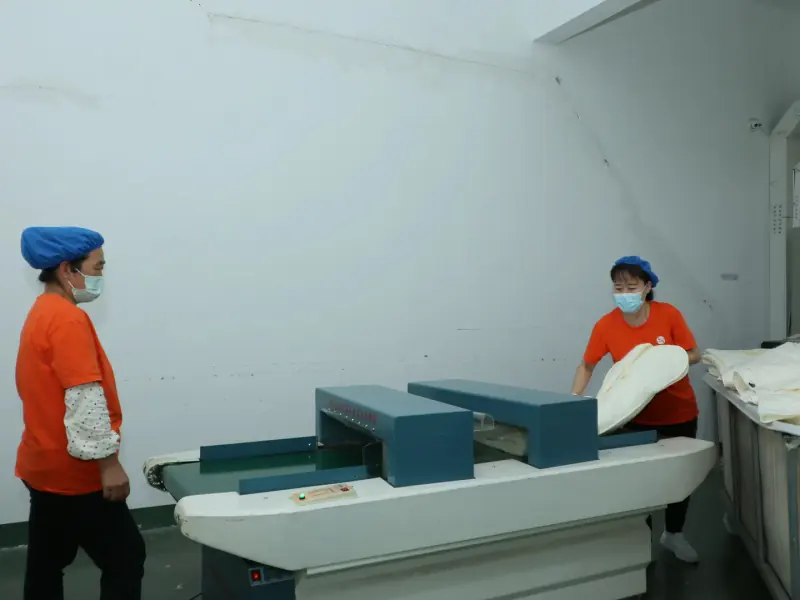
The finished sewn item is positioned on the conveyor for the check.
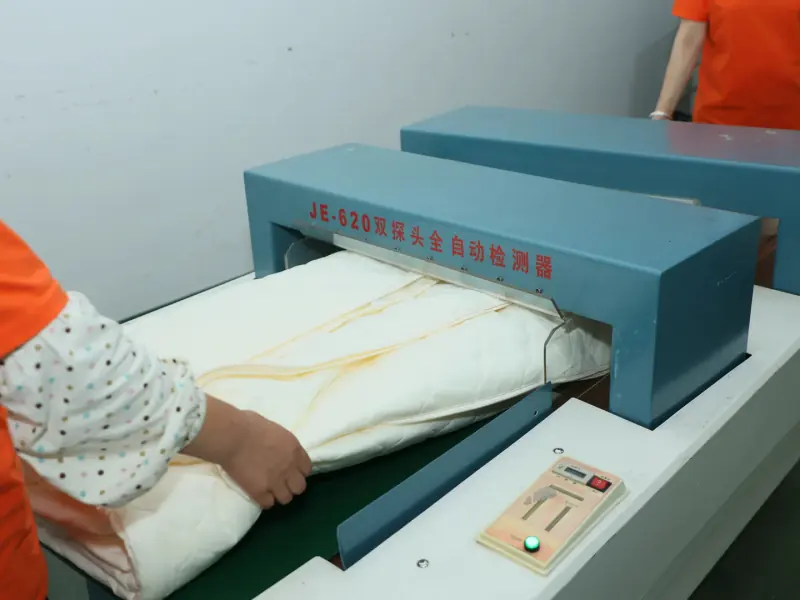
The conveyor carries the product through the equipment's detection area.
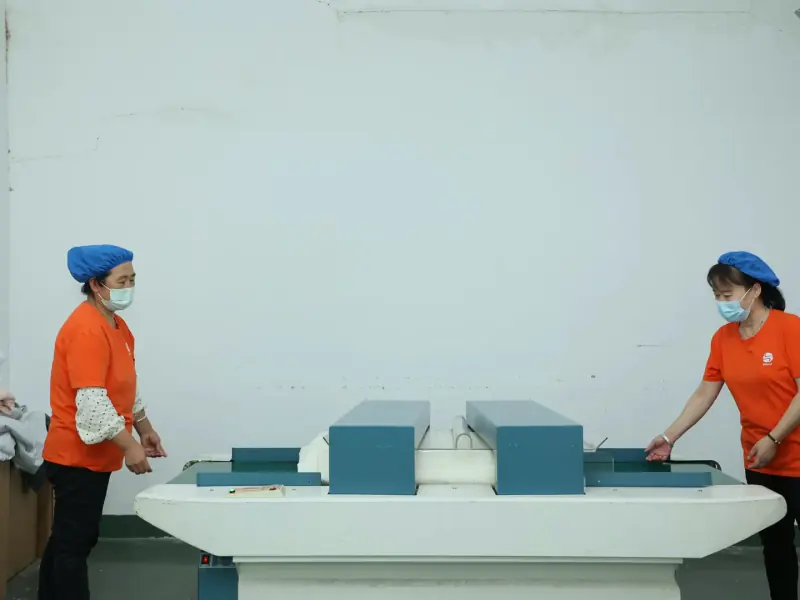
The product exits the equipment before moving to the packing stage.
Buyer benefit
Visible material issues can be identified before cutting.
Problem material can be marked and separated before further processing.
Roll, batch, supplier, and order references support issue follow-up.
Planning a private-label order?
Share your product, material, target market, and order requirements with our team.